
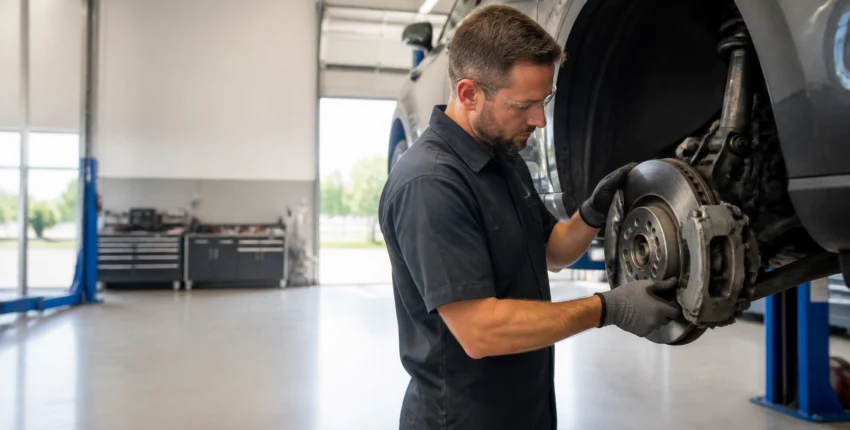
Your brakes rarely fail without giving you clues first.
A high-pitched squeak, rough grinding sound, or vibration through the steering wheel can be your vehicle’s way of saying, “Something needs attention.” Learning to recognize those signals can help you protect your safety, avoid damage to expensive brake components, and prevent a small repair from becoming a major one.
Think of your braking system like your cardiovascular system. Your heart, blood vessels, and muscles must work together to keep you moving safely. Your brakes work in a similar way: pads, rotors, calipers, brake fluid, lines, and electronic systems must all work together every time you stop.
When one part becomes worn or damaged, the entire system can be affected.
The Basics: How Your Brakes Stop Your Vehicle
Most modern vehicles use disc brakes. When you press the brake pedal:
- The master cylinder creates hydraulic pressure.
- Brake fluid carries that pressure through the brake lines.
- The caliper squeezes the brake pads against the rotor.
- Friction between the pads and rotor slows the wheel.
- Your tires transfer that stopping force to the road.
That process happens every time you stop at a Bonne Terre intersection, slow down on a hill, or brake suddenly in traffic.
Because brake parts operate under intense heat and friction, they gradually wear down. However, the warning signs often appear before braking performance becomes seriously compromised.
What a Brake Squeak Usually Means
A light squeak does not always mean your brakes are failing. Moisture, overnight condensation, surface rust, or small pieces of road debris can sometimes create a brief noise during the first few stops.
But a squeak that keeps returning deserves attention.
A high-pitched squeal may indicate worn brake pads
Many brake pads include a small metal wear indicator. As the friction material becomes thin, this indicator contacts the rotor and produces a sharp squeal. It is designed to give you advance notice that your pads are approaching the end of their service life.
Schedule a brake inspection if:
- The squeal happens regularly when you press the pedal.
- The noise is becoming louder or more frequent.
- You hear it at low speeds in parking lots or neighborhood traffic.
- The vehicle still stops normally, but the sound does not go away.
Replacing brake pads while there is still usable material left is usually more affordable than waiting until the backing plate damages the rotor.
AAA notes that brake life varies based on your vehicle, driving habits, weather, and traffic conditions. Frequent stop-and-go driving and repeated hard braking can shorten pad life. You can review additional warning signs in AAA’s brake maintenance guide.

Why Brake Grinding Is More Urgent
Grinding is different from squeaking.
Imagine rubbing two pieces of bare metal together. That harsh, scraping sound is similar to what may happen when brake pad friction material has worn away and the metal backing plate is contacting the rotor.
Grinding can damage more than the brake pads
Continuing to drive with grinding brakes can quickly damage:
- Brake rotors
- Calipers
- Caliper brackets
- Wheel hubs
- Other nearby components
The vehicle may still stop, but that does not mean it is safe to keep driving normally. Braking performance can become less predictable, stopping distances may increase, and additional damage can occur with every trip.
If you hear persistent grinding, avoid unnecessary driving. Have the vehicle inspected as soon as possible. If the pedal feels weak, the vehicle pulls severely, smoke is visible, or the brake warning light remains on, arrange for a tow rather than driving it to the shop.
Autocenters Service provides brake and rotor services, including brake pad replacement, rotor resurfacing or replacement, brake fluid flushes, and complete brake system inspections.
What Brake Vibration or Pulsation Tells You
Do you feel a rhythmic pulsing in the brake pedal? Does the steering wheel shake when you slow down from highway speed? Does the vehicle shudder as you approach a stop sign?
These sensations can point to unevenly worn or distorted brake rotors.
Rotor problems can develop from heat and uneven wear
Brake rotors absorb a substantial amount of heat during braking. Repeated heavy braking, long downhill drives, a sticking caliper, or uneven pad material transfer can create an irregular rotor surface.
You may notice:
- A pulsing brake pedal
- Steering wheel vibration during braking
- Shaking that is more noticeable at higher speeds
- A rhythmic sensation that matches the rotation of the wheels
- Vibration that becomes worse during repeated stops
Sometimes a rotor can be resurfaced if enough material remains and its condition allows it. In other cases, replacement is the safer solution. A professional inspection and measurement are necessary to determine which option is appropriate.
Do not assume that vibration is “just an alignment issue.” A wheel alignment can affect how your vehicle tracks and how your tires wear, but brake-related vibration requires the brake system to be evaluated directly.
Other Brake Warning Signs You Should Not Ignore
Noise and vibration are common clues, but your vehicle can communicate brake problems in other ways.
A soft or spongy pedal
Your brake pedal should feel firm and consistent. If it feels soft, sinks toward the floor, or requires pumping, the system may have air, moisture, a hydraulic leak, or a problem with the master cylinder.
This is a serious warning. Do not continue driving until the cause has been identified.
A very hard brake pedal
A pedal that suddenly feels unusually hard may indicate a problem with the brake booster or vacuum assist system. You may still be able to stop, but you could need significantly more effort and distance.
Arrange an inspection promptly.
Pulling to one side
If your vehicle pulls left or right when you brake, one side may be braking more effectively than the other. Possible causes include:
- Uneven pad wear
- A sticking caliper
- A damaged brake hose
- Uneven hydraulic pressure
- Suspension or tire-related problems
A pulling vehicle can become especially difficult to control during an emergency stop or on wet Missouri roads.
A burning or chemical smell
A sharp burning smell near one wheel can indicate overheated brakes. A sticking caliper may keep a pad pressed against the rotor even when you are not braking.
If you notice smoke, pull over safely, turn off the vehicle, and allow the brakes to cool. Do not touch the wheel or brake components. Have the system inspected before continuing your trip.
A brake or ABS warning light

A red brake warning light may mean the parking brake is engaged, but it can also indicate low brake fluid or another hydraulic problem. An amber ABS light may signal that the anti-lock braking system needs diagnosis.
Check your owner’s manual for the specific meaning of the light. If a red warning light stays on after you release the parking brake: or if the light appears with a change in pedal feel: treat it as urgent.
A Simple Brake Check You Can Perform Safely
You should never dismantle brake components at home unless you have the proper training and equipment. However, you can pay attention to several useful clues during normal driving.
Before your next trip, ask yourself:
- Does the vehicle stop in the same distance as it used to?
- Is the brake pedal firm?
- Does the steering wheel remain steady while braking?
- Does the vehicle pull in either direction?
- Do you hear squeaking, grinding, scraping, or clicking?
- Do you smell something hot near a wheel?
- Is the brake or ABS warning light illuminated?
- Does one wheel appear to produce far more brake dust than the others?
If your wheels allow a clear view, you may also be able to see whether the brake pad material looks very thin. However, visual checks cannot replace a complete inspection. Some brake problems develop on the inside pad, where they are not easily visible.
Why Small Brake Repairs Can Prevent Bigger Costs
Worn brake pads are a normal maintenance item. Ignoring them is what creates unnecessary expense.
For example, replacing pads before they reach the backing plate may help preserve the rotors. Addressing a sticking caliper early may prevent excessive heat damage. Replacing contaminated brake fluid can help maintain consistent hydraulic performance.
This is the same reason you visit a doctor for a small health concern instead of waiting for an emergency. Early attention gives you more options and often reduces the overall cost.
Regular inspections are particularly important if you:
- Drive in frequent stop-and-go traffic
- Travel on hilly roads
- Tow or carry heavy loads
- Drive a large SUV or light truck
- Notice new brake symptoms
- Have recently purchased a used vehicle
- Are preparing for winter or a long road trip
Missouri’s changing weather can add stress to your vehicle. Moisture, cold temperatures, road debris, and sudden changes in traction all make reliable braking important. Before winter travel or a family trip through the area, have your brakes checked if anything feels different.

When to Call Autocenters Service
Do not wait for a complete brake failure to schedule service.
Autocenters Service’s ASE Blue Seal of Excellence-certified technicians use modern diagnostic tools to inspect late-model vehicles and identify the source of brake noise, vibration, warning lights, and pedal changes. We service all makes and models, including domestic, foreign, and late-model cars, SUVs, and light trucks.
Our team can inspect:
- Brake pads and rotors
- Calipers and hardware
- Brake fluid condition
- Brake lines and hoses
- Master cylinder and booster operation
- ABS warning systems
- Related tire, steering, and suspension concerns
You can schedule an appointment through our online appointment page, call 573-226-9500, or visit Autocenters Service at 7 Northwood St, Bonne Terre, MO 63628.
Pay attention to what your vehicle is telling you. A squeak may be an early reminder. A grind may be an urgent warning. A vibration may signal an uneven rotor. Acting promptly can protect your safety, your vehicle, and your wallet.
When your brakes do not sound or feel right, contact Autocenters Service for a professional inspection and the peace of mind that comes with safe, dependable stopping.